Projects
M.Sc. Thesis, Building Performance & Diagnostics, Carnegie Mellon University
Master’s Thesis Project Graduation Award
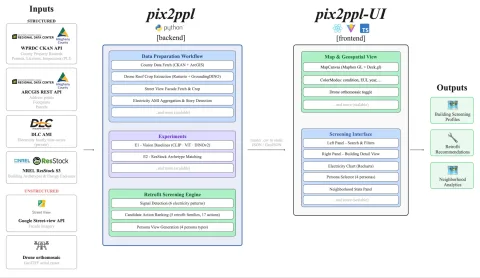
How much can a model recover about an existing building when every data source has gaps? This thesis combines a nine-task vision benchmark on 590 Pittsburgh homes, a failed measurement check for national archetype matching, and an interface that keeps observed, inferred, and missing fields separate. Frozen DINOv2 features reach 0.505 mean macro-F1, compared with 0.280 for the best zero-shot VLM and 0.192 for majority vote.
Center for Building Performance & Diagnostics, Carnegie Mellon University
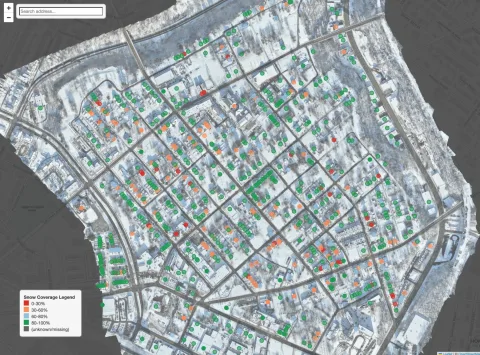
What can remote sensing add when building records are incomplete? The work combines a LiDAR-informed neighborhood model with an exploratory snow-retention study from one winter drone flight. Roof form has the clearest association with snow retention. Winter electricity medians move in the expected direction across snow buckets, but the distributions overlap heavily and gas use is unavailable.
10-623 Generative AI, Carnegie Mellon University
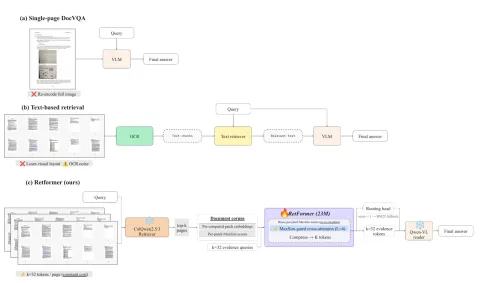
A 23M-parameter bridge compresses each retrieved page into 32 tokens for a frozen VLM reader. On 500 sampled training queries, its attention has about four times the IoU of the raw MaxSim map. Answer quality is less convincing: it beats Top-1 raw retrieval on a 30-question subset, then ties plain OCR on F1 across 100 questions. Diagnostics point to information loss in the retriever representation, but the study does not isolate that cause.
Applied Machine Learning, Carnegie Mellon University
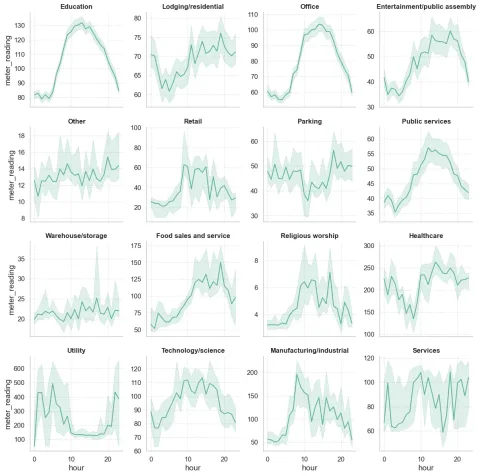
Feature engineering and gradient-boosted regression for building-energy prediction on the ASHRAE Great Energy Predictor III dataset.
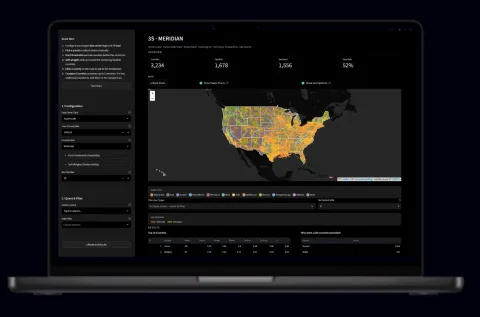
CMU Civil & Environmental Engineering × Gresham Smith Innovation Hackathon
2nd Place, Gresham Smith Innovation Hackathon, 2026
An interactive siting tool that separates non-negotiable engineering constraints from preferences and exposes why each county passed, failed, or ranked where it did.
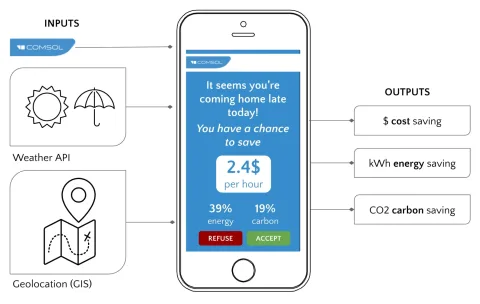
MIT Climate & Energy Hackathon, COMSOL challenge
3rd Place, MIT Climate & Energy Hackathon, 2025
A hackathon concept for turning geolocation, weather, and a simplified COMSOL building model into an explicit opt-in HVAC setback recommendation.
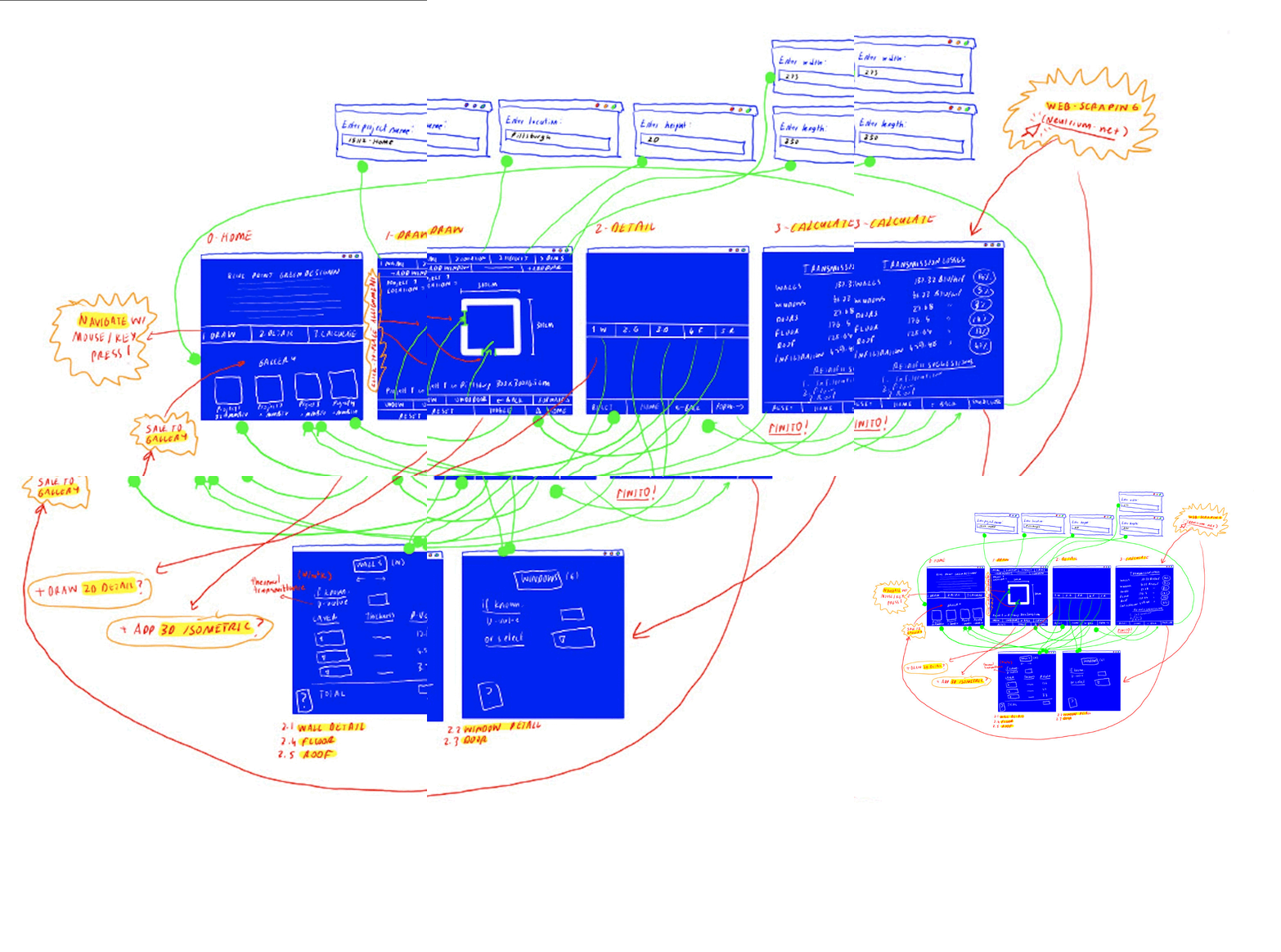
Fundamentals of Programming and Computer Science, Carnegie Mellon University
Desktop design tool for plan drawing, component-level heat-loss calculation, and residential retrofit prioritization.
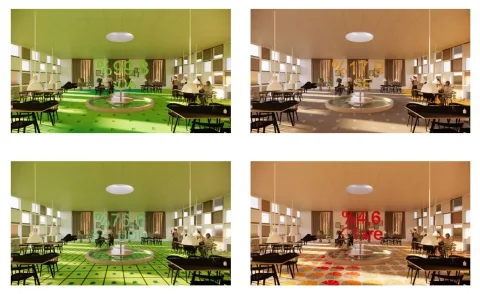
Graduate work spanning building-energy simulation, daylight analysis, envelope retrofits, environmental sensing, and building controls.
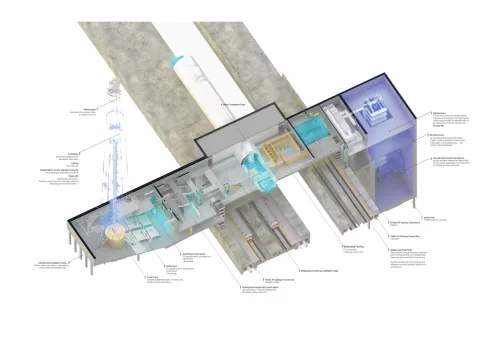
Selected B.Arch. design work, including a graduation thesis exploring data-center infrastructure as civic architecture.